
Heart emoji meanings vary by color and shape. Red (❤️) signals love and passion, pink (🩷) shows tender affection, yellow (💛) means friendship, blue (💙) reflects trust, and black (🖤) can express grief or edgy humor. Context and relationship always shape the true meaning.
You just got a text with a single emoji, and now you’re staring at your phone trying to figure out what it means. Was that orange heart just friendly, or does it mean something more? Heart emoji meanings can feel like a secret language, and getting them wrong can lead to awkward mix-ups or missed signals.
The truth is, hearts carry different weight depending on their color, shape, and the person sending them. A red heart from your partner reads very differently than a red heart from a coworker. In this guide, you’ll learn what each heart color and heart-shaped emoji commonly communicates, how context changes their meaning, and which heart to send in real situations. By the end, you’ll be able to read (and send) hearts with a lot more confidence.
Heart Emoji Meanings at a Glance
Before diving into details, here’s a quick snapshot of what each heart typically signals. Think of this as a starting point, not a strict rulebook.
| Emoji | Common Meaning | Typical Tone | Common Use |
| ❤️ | Love, deep affection | Strong, direct | Romance, family, close relationships |
| 🩷 | Tender affection, sweetness | Soft, warm | Romance, friendship, caring |
| 🧡 | Warmth, care, encouragement | Friendly | Support, affection, friendship |
| 💛 | Happiness, friendship | Cheerful | Friends, positivity |
| 💚 | Nature, growth, support | Varied | Nature, health, support, sometimes jealousy |
| 💙 | Trust, loyalty, calm | Stable | Friendship, support, loyalty |
| 🩵 | Gentleness, calm, tenderness | Soft | Support, affection, peaceful feelings |
| 💜 | Compassion, admiration, creativity | Expressive | Affection, support, fandom |
| 🤎 | Warmth, comfort, earthiness | Cozy | Family, nature, cultural contexts |
| 🖤 | Dark humor, grief, alternative affection | Intense/edgy | Irony, mourning, aesthetics |
| 🩶 | Neutrality, balance, subtle emotion | Reserved | Subtle support or neutral expression |
| 🤍 | Pure love, peace, sympathy | Gentle | Support, remembrance, care |
| 💔 | Heartbreak, emotional pain | Sad | Loss, disappointment, grief |
These are common interpretations based on widespread usage, not official or universal rules. The same emoji can shift meaning depending on who sends it and why.
What Each Heart Color Commonly Communicates?
Every heart color has picked up its own personality over years of everyday use. Here’s how people generally read each one.
❤️ Red Heart — Love, Passion, and Strong Affection
The red heart is the original and most direct symbol of love. It covers romantic love, deep family affection, and close friendships where feelings run strong.
Because it’s the oldest and most recognized heart emoji, it carries the most emotional weight. Sending it usually signals genuine, unfiltered affection rather than a casual gesture.
Read More: Red Heart Emoji Meaning ❤️: What It Really Means in Texts and Messages
🩷 Pink Heart — Tenderness and Sweet Affection
The pink heart feels softer and sweeter than red. It’s often used for cute, gentle romantic moments or warm platonic affection.
People frequently choose pink over red when they want to express caring without the heavier intensity that red can carry.
🧡 Orange Heart — Warmth, Care, and Encouragement
Orange hearts show up in supportive, encouraging messages. It’s common between friends, coworkers, or family members cheering someone on.
It feels warm without leaning romantic, making it a safe choice for supportive check-ins or celebrating someone’s small win.
💛 Yellow Heart — Friendship and Happiness
Yellow is strongly tied to friendship and cheerful energy. It’s a go-to emoji for close friends who want to show appreciation without romantic undertones.
- Common in group chats among friends
- Often paired with celebratory messages
- Rarely interpreted as romantic
💚 Green Heart — Nature, Growth, and Mixed Meanings
Green heart meanings shift more than most. It’s linked to nature, health, growth, and environmental topics.
In some contexts, especially older internet slang, green can also imply jealousy. Reading the surrounding message helps clarify which meaning applies.
💙 Blue Heart — Trust, Loyalty, and Support
Blue hearts communicate steady, dependable affection. They’re common among close friends and in messages meant to reassure or support someone.
It feels less intense than red, making it popular for loyal friendships or stable, long-term relationships.
🩵 Light Blue Heart — Calm, Gentleness, and Soft Support
This newer heart color leans gentle and calming. People use it to offer quiet reassurance or express soft affection without heavy emotion.
It works well in comforting messages, especially when someone wants to sound caring but not overwhelming.
💜 Purple Heart — Compassion, Admiration, and Expressive Affection
Purple hearts carry an expressive, sometimes artistic tone. They’re common in fandom communities, admiration messages, and supportive comments.
- Often used to show compassion for a cause
- Popular for celebrity or creator appreciation
- Can express general admiration without romance
🤎 Brown Heart — Comfort, Warmth, and Earthiness
Brown hearts feel cozy and grounded. They’re often tied to nature, comfort, and family warmth, and can carry cultural significance in some communities.
It’s less commonly romantic and more about a sense of stability or belonging.
🖤 Black Heart — Dark Humor, Grief, and Alternative Affection
The black heart is one of the most context-dependent emojis. It can signal dark humor, mourning, or an edgier form of affection tied to alternative aesthetics.
Because its meaning swings so widely, reading the tone of the full conversation is essential before assuming intent.
🩶 Grey Heart — Subtle, Neutral, or Reserved Emotion
Grey is one of the newer heart emojis and tends to feel understated. People use it when they want to express care without a strong emotional statement.
It’s often chosen by users who find brighter hearts too intense for the moment.
🤍 White Heart — Pure Affection, Peace, and Sympathy
White hearts feel gentle and peaceful. They’re commonly used for condolences, remembrance, and quiet emotional support.
It works well when someone wants to express care during a difficult time without adding romantic or overly cheerful energy.
Heart-Shaped Emojis That Aren’t Just Colors
Beyond color, heart shapes and designs add their own layer of meaning.
💔 Broken Heart — Heartbreak and Emotional Pain
This emoji directly represents emotional pain, disappointment, or romantic loss. It’s typically used after a breakup, rejection, or disappointing news.
💕 Two Hearts — Mutual Affection and Sweet Connection
Two hearts feel lighter and more playful than a single red heart. It suggests mutual, cheerful affection rather than intense romance.
💞 Revolving Hearts — Mutual Love and Emotional Connection
This emoji emphasizes reciprocity. It’s often used to highlight a connection between two people that feels balanced and mutual.
💓 Beating Heart — Strong or Excited Emotion
Beating hearts suggest heightened emotion, whether that’s romantic excitement, nervous anticipation, or general enthusiasm.
💗 Growing Heart — Increasing Affection
This emoji captures the idea of feelings growing stronger over time, often used early in a relationship or when excitement is building.
💖 Sparkling Heart — Excitement, Admiration, and Enthusiastic Love
Sparkling hearts add celebration and sparkle to affection. They’re common for exciting relationship milestones or enthusiastic compliments.
💘 Heart with Arrow — Falling in Love
Tied closely to Cupid imagery, this emoji is almost always used to express falling in love or romantic attraction.
💝 Heart with Ribbon — A Gift of Love
This emoji frames affection as a gift. It’s popular around Valentine’s Day and in messages expressing appreciation or thoughtful gestures.
🫶 Heart Hands — Love, Appreciation, and Support
Heart hands have become a flexible symbol of gratitude, solidarity, and encouragement. It doesn’t require romantic intent and works well in almost any supportive context.
Which Heart Emoji Should You Send?
If you’re not sure which heart fits your message, this quick guide can help:
- To express romantic love: ❤️
- To show tender or cute affection: 🩷
- To thank or encourage someone: 🧡
- To show friendship: 💛
- To express loyalty or steady support: 💙
- To comfort someone: 🤍 or 🩵
- To express admiration: 💜
- To communicate playful or alternative affection: 🖤
- To express heartbreak: 💔
- To show appreciation or solidarity: 🫶
No emoji dictionary can override the context of your actual relationship. If you and a friend already use red hearts platonically, that established pattern matters more than any general guideline.
How Heart Emojis Change Meaning by Context?
The same heart emoji can land completely differently depending on where and how it’s used.
In Romantic Relationships
Between partners, hearts often reinforce intimacy, reassurance, or flirtation. A red heart at the end of a goodnight text usually deepens the emotional tone of the message.
Between Friends
Friends frequently use hearts in a fully platonic way. Yellow or blue hearts especially tend to signal friendship rather than romance, even when used often.
From Family Members
Family members typically use hearts to express warmth, pride, or encouragement, such as congratulating a child or thanking a parent.
In Professional or Public Conversations
Hearts can feel too personal in workplace messages. A thumbs-up or a simple “thanks” often reads as more appropriate than a heart in professional settings.
In Social Media Comments
On public posts, hearts commonly show support, admiration, or celebration. They’re often used in fandom spaces or to show enthusiasm for someone’s content.
Why the Same Heart Emoji Can Mean Different Things?
Several factors shape how a heart emoji gets interpreted:
- Relationship between sender and recipient
- Message wording
- Conversation history
- Age and generation
- Cultural background
- Platform and social community
- Emoji combinations
- Whether the message is public or private
For example, a red heart sent to a partner after “I love you” clearly signals romance. That same red heart sent to a parent after “thanks for everything” clearly signals family affection. The emoji doesn’t change, but the surrounding context does.
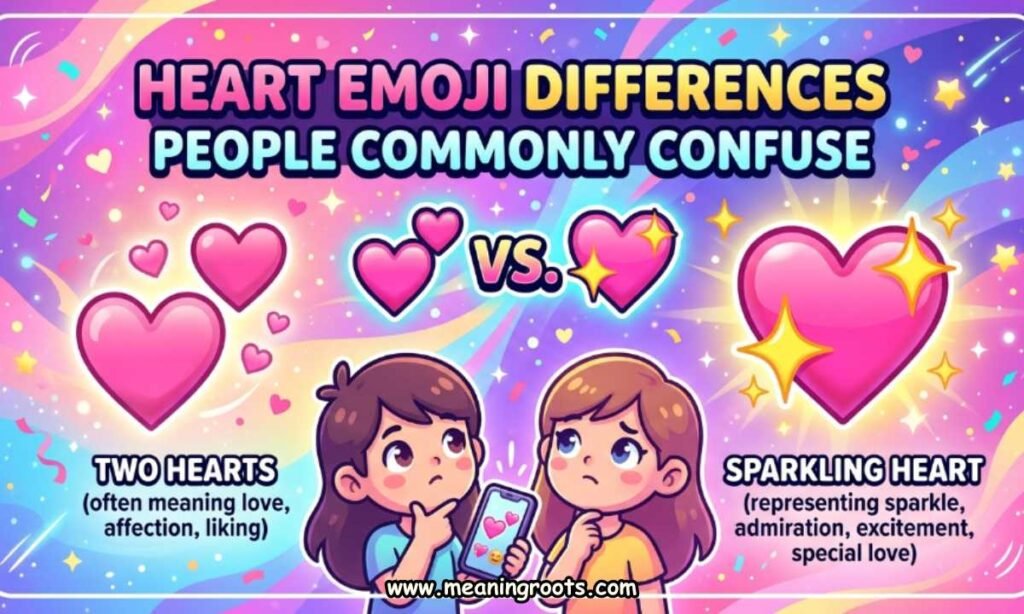
Heart Emoji Differences People Commonly Confuse
❤️ vs. 🩷
Red feels stronger and more established; pink feels softer and sweeter.
❤️ vs. 💕
A single red heart is direct and intense; two hearts feel lighter and more playful.
💕 vs. 💖
Two hearts suggest mutual affection; sparkling hearts add extra excitement or celebration.
💛 vs. 💙 for Friendship
Yellow leans cheerful and upbeat; blue leans loyal and steady.
🤍 vs. 🩶
White feels gentle and warm; grey feels more neutral and reserved.
🖤 vs. 🤍 for Grief and Sympathy
Black can carry heavier or edgier emotional weight; white feels softer and more comforting.
💔 vs. ❤️🩹 for Emotional Pain and Healing
A broken heart signals raw heartbreak; a heart with a bandage suggests the healing process has already begun.
Do Heart Emoji Meanings Have Official Definitions?
Unicode, the organization responsible for standardizing emoji across devices, assigns each heart an official name, such as “red heart” or “purple heart.” However, these names describe appearance, not emotional meaning.
Most heart emoji meanings come from cultural usage rather than any official source. Communities, generations, and social platforms shape how each heart gets interpreted over time.
This is why emoji meanings evolve. A heart that felt purely platonic five years ago might carry new nuance today, especially as newer heart colors like light blue and grey continue to gain popularity. Treating these meanings as flexible conventions, rather than fixed rules, leads to better communication.
Quick Reference: The Best Heart Emoji for Every Situation
| Situation | Suggested Emoji | Why |
| Saying “I love you” | ❤️ | Direct and universally recognizable |
| Supporting a friend | 💛 / 💙 | Warmth or loyalty |
| Sending sympathy | 🤍 | Gentle and supportive |
| Celebrating a relationship | 💕 / 💖 | Affectionate and upbeat |
| Expressing heartbreak | 💔 | Direct emotional symbolism |
| Showing appreciation | 🫶 | Gratitude and support |
| Expressing soft affection | 🩷 | Tender and warm |
| Sharing dark humor | 🖤 | Context-dependent, edgy tone |
Frequently Asked Questions About Heart Emojis
Can a heart emoji be platonic?
Yes. Heart emojis are frequently used between friends, family members, and supportive communities without romantic intent. Context matters more than the symbol alone.
Which heart emoji feels the most romantic?
❤️ is generally the clearest choice for romantic love, while 💘 can emphasize falling in love or romantic attraction.
Is a pink heart more romantic than a red heart?
Not necessarily. 🩷 often feels softer or sweeter, while ❤️ tends to communicate more direct or established love.
What heart emoji is best for sympathy?
🤍 is commonly used for gentle support, peace, remembrance, or sympathy, though the best choice depends on the relationship and situation.
Can heart emoji meanings change over time?
Yes. Emoji usage evolves with culture, online communities, generations, and social platforms, so meanings can shift or develop additional nuances.
Conclusion
Heart emoji meanings aren’t fixed, but patterns do exist. Red signals strong, direct love, pink leans tender, yellow points to friendship, and black can swing between dark humor and grief depending on the moment. Shape matters too, since a broken heart, sparkling heart, or heart hands each carry their own emotional tone.
The most reliable way to understand heart emoji meanings is to look at the relationship, the wording around it, and the platform where it’s used. When in doubt, context will always tell you more than the emoji alone. Next time you’re deciding which heart to send, use this guide as a starting point, then trust what you already know about the person you’re talking to.

My name is Daniel.I am a passionate writer in the meaning niche with over 4 years of experience exploring life purpose and personal growth. I create thoughtful content that helps readers understand deeper meaning in everyday experiences.
1 thought on “Heart Emoji Meanings: What Every Heart Color and Symbol Means”