

The red heart emoji (❤️) generally represents love, affection, care, or appreciation. Its exact meaning depends on who sent it, the message it follows, and the relationship between the two people. It can signal romantic love, friendship, gratitude, or emotional support, so context matters more than the emoji itself.
You just got a text ending in ❤️, and now you’re staring at your phone trying to figure out what it means. Are they into you? Just being nice? Is this a big deal or nothing at all?
The red heart emoji meaning isn’t as simple as “I love you.” This little symbol shows up in romantic texts, group chats, thank-you notes, and even comments on a stranger’s post. It can carry serious emotional weight, or it can be a casual way to say “nice” and move on.
In this guide, you’ll learn what the ❤️ emoji actually means, how it changes depending on who sends it, and how to respond without overthinking (or underthinking) it. We’ll break down real texting scenarios, compare ❤️ to other heart emojis, and give you a simple framework for reading context so you’re not left guessing.
By the end, you’ll be able to look at any ❤️ text and have a much clearer idea of what’s really being communicated.
Related: Heart Emoji Meanings: What Every Heart Color and Symbol Means
The Core Meaning Behind the ❤️ Red Heart Emoji
The red heart emoji is the original heart emoji and still the most widely used one on every major platform. It carries the broadest emotional range of any heart color, which is exactly why it causes so much confusion.
Love and Romantic Affection
This is the meaning most people think of first. In romantic texting, ❤️ often expresses love, deep affection, or a desire for closeness. A partner sending “miss you already ❤️” is communicating something warm and personal, often reinforcing an existing romantic bond rather than starting one.
Care, Warmth, and Appreciation
Outside of romance, ❤️ frequently means “I appreciate you” or “this means something to me.” Someone might reply ❤️ to a compliment, a kind gesture, or good news shared by a friend. It’s a quick, low-effort way to show genuine warmth without writing a full sentence.
Friendship and Emotional Support
Friends use ❤️ constantly, and it rarely signals romance. A friend might send ❤️ after you vent about a rough day, simply to say “I hear you” or “I’m here for you.” Among close friends, this emoji often works like a digital hand on the shoulder.
Why Context Matters More Than the Emoji Alone
The same emoji can mean five different things depending on who sends it, what they said right before it, and the history between the two people. A ❤️ from a partner after “goodnight” reads very differently than a ❤️ from a coworker after “great job on the presentation.” Context, not the symbol itself, does most of the interpretive work.
What ❤️ Means in Different Relationships?
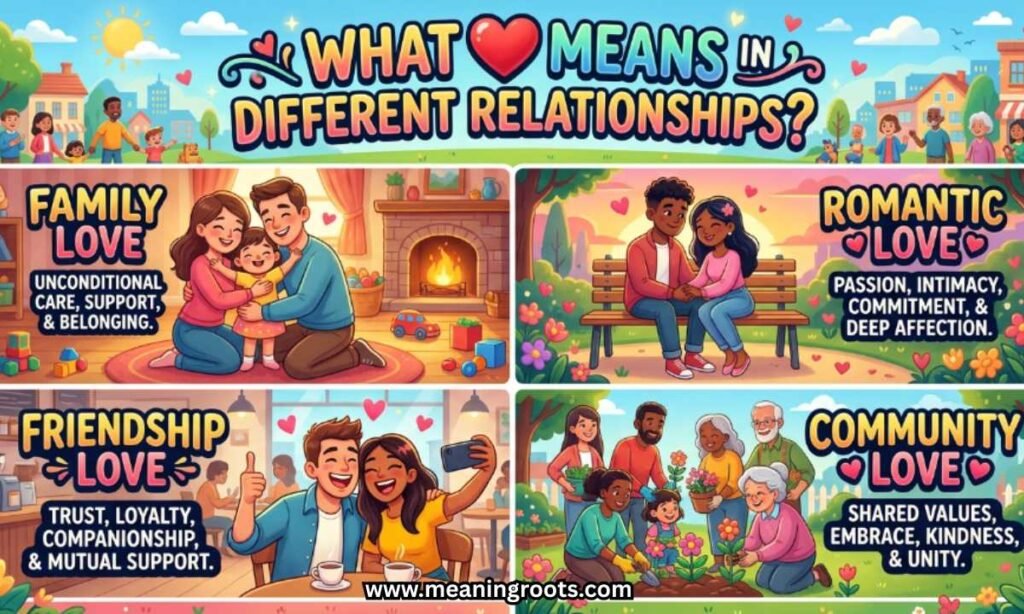
Who sends the heart matters as much as the heart itself. Here’s a quick breakdown of how relationship context shapes the likely meaning.
| Sender / Relationship | Possible Meaning | Romantic Likelihood |
| Romantic partner | Love, intimacy, reassurance | High |
| Crush | Affection, interest, flirtation | Medium–High |
| Close friend | Care, appreciation, support | Low–Medium |
| Family member | Love, warmth, care | Usually low |
| New acquaintance | Warmth, friendliness, gratitude | Low |
| Coworker | Appreciation or encouragement | Usually low |
A heart from your mom after “call me when you land ❤️” is warmth and care, not romance. A heart from a crush after a long, flirty conversation carries a very different weight. The relationship sets the baseline before you even read the message.
Editorial note: Relationship context is a far more reliable guide than gender-based assumptions. Claims like “guys only send hearts if they’re serious” or “girls send hearts to everyone” don’t hold up in practice. Individual habits vary too much for broad gender rules to be useful, so it’s better to look at the specific person and relationship in front of you.
What Does ❤️ Mean in Texting?
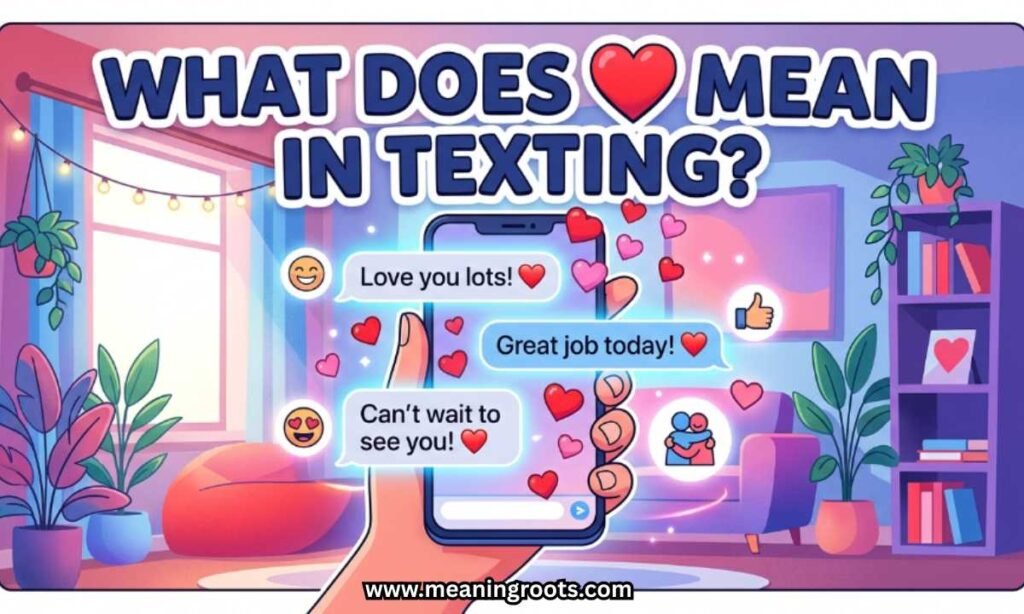
The meaning of ❤️ shifts depending on where it lands in a conversation. Here’s how it plays out in common texting situations.
❤️ as a Standalone Reply
A lone ❤️ with no words attached can mean “I love this,” “thank you,” “I agree,” or simply “noted, and I appreciate it.” It’s a low-pressure way to acknowledge a message without needing to type a full reply.
❤️ After “Thank You”
When ❤️ follows gratitude, it usually reinforces sincerity. “Thanks for helping me move ❤️” reads as genuine appreciation, not romantic interest.
❤️ After Good News
Following an announcement like “I got the job!”, a ❤️ typically expresses shared happiness and celebration, similar to an excited hug in text form.
❤️ After a Vulnerable or Emotional Message
When someone shares something difficult and gets a ❤️ in response, it usually communicates empathy, reassurance, or quiet support, especially when the sender doesn’t have the right words yet.
❤️ in a Flirty Conversation
In a conversation already carrying flirtatious energy, ❤️ can intensify romantic or affectionate undertones. Here, surrounding tone shifts the emoji from friendly to romantic territory.
What Does It Mean When Someone Sends You ❤️?
Instead of guessing, it helps to run through a quick mental checklist. This context-first framework applies to almost any confusing ❤️ text.
- Who sent it? A partner, friend, coworker, or family member all carry different baseline meanings.
- What did they say immediately before it? The preceding sentence usually carries most of the meaning.
- Do they normally use heart emojis? Some people add hearts to nearly every message; others save them for meaningful moments.
- Is the conversation romantic, friendly, or practical? The overall tone of the exchange matters more than one emoji.
- Are other romantic signals present? Compliments, late-night texting, or increased attention can shift the interpretation.
- Is the emoji recurring or a one-time gesture? A pattern tells you more than a single instance.
An emoji alone can’t reliably prove someone’s romantic intentions. It’s a signal, not a confession, and it’s meant to be read alongside everything else happening in the conversation.
❤️ Compared With Other Heart Emojis
Heart color changes the emotional tone, even when the underlying sentiment is similar. Here’s how ❤️ stacks up against the rest of the heart family.
| Emoji | Common Association | Typical Emotional Tone |
| ❤️ | Love, affection, care | Strong and universal |
| 🩷 | Sweetness, gentle affection | Soft and playful |
| 🧡 | Care, warmth, friendship | Warm and supportive |
| 💛 | Happiness, friendship | Cheerful |
| 💚 | Support, nature, affection | Context-dependent |
| 💙 | Trust, loyalty, support | Calm and supportive |
| 💜 | Affection, admiration, compassion | Expressive |
| 🖤 | Dark humor, grief, style | Context-dependent |
| 🤍 | Purity, sympathy, peace | Gentle |
| 🤎 | Warmth, comfort, earthiness | Cozy |
| ❤️🔥 | Intense or passionate love | Highly romantic / intense |
❤️ vs. 🩷
The pink heart feels softer and more playful, often used for cute or sweet moments rather than deep romantic declarations. ❤️ carries more emotional weight and universality, while 🩷 leans lighthearted.
❤️ vs. ❤️🔥
The heart on fire signals heightened passion or intensity, the kind of energy used in a new romance or a particularly charged moment. Plain ❤️ is steadier and more general, fitting everyday affection rather than an emotional peak.
❤️ vs. 💛
Yellow hearts are widely understood as friendship-coded, often used between friends without any romantic undertone. ❤️ doesn’t carry that same automatic “just friends” signal, which is part of why it causes more overthinking.
Does ❤️ Always Mean “I Love You”?
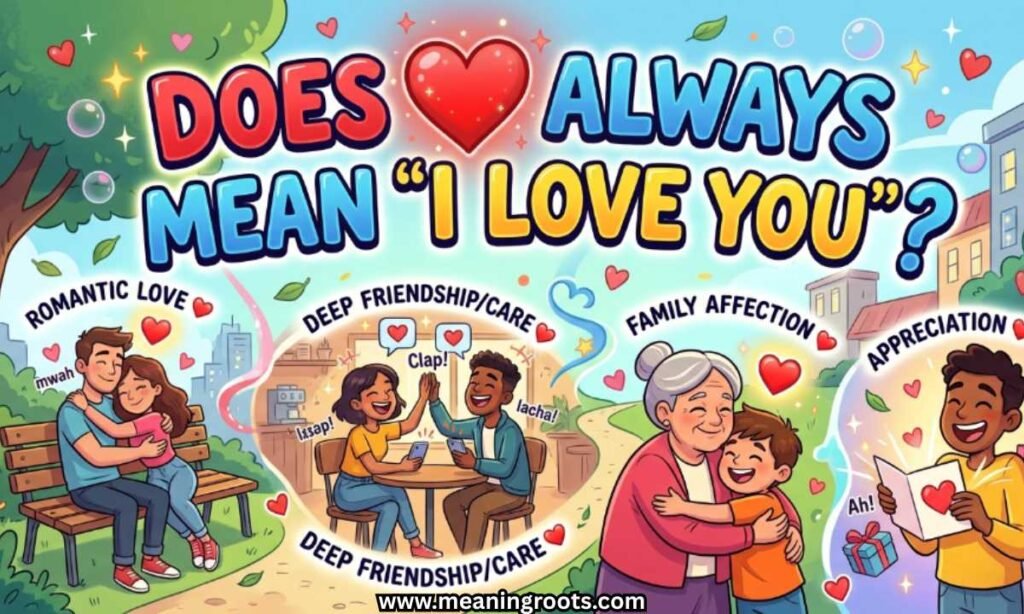
No. This is one of the biggest misconceptions about the red heart emoji.
❤️ sits on a spectrum of meanings, and “I love you” is only one point on that spectrum. Depending on context, it can mean:
- I love you
- I care about you
- I appreciate you
- I support you
- I love this
- Thank you
- That made me happy
- Sending love
The message surrounding the emoji is what narrows down which meaning applies. A ❤️ after “I can’t imagine my life without you” points toward romantic love. A ❤️ after “that meme is hilarious” points toward simple enjoyment. Treating every ❤️ as a declaration of love leads to a lot of unnecessary confusion.
How to Respond When Someone Sends ❤️?
There’s no single “correct” reply. The right response depends on your own feelings and what you want the relationship to look like going forward.
If You Feel the Same Way
Mirror the warmth back. A reply like “❤️ miss you too” or “you always know how to make my day better” keeps the tone consistent and affectionate.
If You Want to Stay Friendly
Acknowledge the kindness without escalating it. Something like “aw, thank you, that’s really sweet of you” keeps things warm but clearly platonic.
If You’re Unsure What They Mean
Respond naturally rather than assuming it’s a romantic confession. A simple “thanks, that means a lot” works in almost any situation and gives you room to observe the pattern before reading too much into one message.
How to Use the ❤️ Emoji Naturally?
Using ❤️ well is mostly about matching it to the moment. Common natural uses include:
- Romantic messages: “Can’t wait to see you tonight ❤️”
- Friendship: “You’re the best, thank you for listening ❤️”
- Family conversations: “Love you, drive safe ❤️”
- Congratulations: “So proud of you ❤️”
- Thank-you messages: “Thank you so much for this ❤️”
- Support and condolences: “Thinking of you ❤️”
- Social media comments: A quick ❤️ on a friend’s post to show approval or support
A quick tip: avoid overusing ❤️ in professional or new relationships, where it can come across as more familiar than intended. On the flip side, don’t overinterpret a single ❤️ from someone who uses it casually with everyone. Reading too much into one emoji is one of the most common texting mistakes people make.
Quick Guide: What ❤️ Usually Means at a Glance
- ❤️ + romantic message → likely romantic affection
- ❤️ + “thank you” → appreciation
- ❤️ from a close friend → care or friendship
- ❤️ after emotional support → empathy or reassurance
- ❤️ as a social media reaction → approval, affection, or appreciation
- ❤️🔥 in romantic conversation → stronger passion or intensity
Topics Competitors Usually Miss
1. Emoji Meaning vs. Sender Intent The standardized, dictionary-style meaning of an emoji isn’t always what a specific person intends. Two people can use ❤️ very differently based on habit and personality.
2. The Importance of Conversation Position A ❤️ after “I miss you” communicates something different from a ❤️ after “Thanks for helping me.” Position in the conversation shapes meaning as much as the emoji itself.
3. The “Standalone Heart” Problem A single ❤️ sent with no accompanying text is inherently more ambiguous. Without a sentence to anchor it, the reader has to rely entirely on relationship history and prior context.
4. Repetition and Intensity Sending ❤️❤️ or ❤️❤️❤️ usually amplifies enthusiasm or affection rather than changing the underlying emotional category. More hearts generally means “more of the same feeling,” not a different feeling entirely.
5. Personal Emoji Habits Some people sprinkle hearts into nearly every message, while others save them for closer relationships. Someone’s typical texting style is one of the most useful signals available.
6. Cultural and Generational Differences Emoji habits vary across age groups, cultures, and platforms. Younger users often use hearts more casually and frequently than older generations, and norms can differ across regions and apps.
7. Gender Assumptions Can Mislead Broad claims like “what ❤️ means from a guy” versus “what ❤️ means from a girl” oversimplify something that’s really about the individual and the relationship, not gender.
8. Platform Rendering The ❤️ emoji can look slightly different across iOS, Android, and other platforms, but the underlying Unicode character and core meaning stay the same.
9. The Difference Between Meaning and Interpretation Meaning is the broadly recognized emotional association tied to the emoji. Interpretation is what a specific sender likely intended in a specific conversation. Both matter, but they’re not the same thing.
Frequently Asked Questions
Does a red heart emoji always mean romantic love?
No. ❤️ can mean romantic love, but it also commonly expresses friendship, gratitude, support, or general warmth. The surrounding message and relationship determine which meaning fits best.
Is it flirty if a guy sends me ❤️?
It depends on the relationship and context, not on gender. Look at the conversation tone, how often he uses hearts, and whether other flirtatious signals are present before assuming romantic intent.
What’s the difference between ❤️ and ❤️🔥?
❤️ represents general love, affection, or care, while ❤️🔥 signals more intense or passionate romantic energy. Think of ❤️🔥 as an amplified, higher-intensity version of ❤️.
Why do some people send ❤️ to everyone?
Personal texting habits vary widely. Some people use hearts casually with friends, family, and coworkers alike, so frequency alone isn’t a reliable sign of special interest.
Should I overthink a single ❤️ text?
Generally, no. Look at the message it followed, your history with that person, and whether it’s part of a pattern rather than treating one emoji as a major signal on its own.
Conclusion
The red heart emoji meaning depends far more on context than most people assume. While ❤️ can absolutely signal romantic love, it just as often communicates friendship, gratitude, support, or plain enthusiasm. The safest approach is to look at who sent it, what they said beforehand, and how that person typically texts, rather than reading the emoji in isolation.
Next time a ❤️ shows up in your messages, take a breath before overanalyzing it. Consider the relationship, the conversation, and the pattern of behavior, and you’ll usually land on a much clearer answer than the emoji could ever give you on its own.
Continue Reading: Heart Emoji Meanings: What Every Heart Color and Symbol Means

My name is Daniel.I am a passionate writer in the meaning niche with over 4 years of experience exploring life purpose and personal growth. I create thoughtful content that helps readers understand deeper meaning in everyday experiences.
1 thought on “Red Heart Emoji Meaning ❤️: What It Really Means in Texts and Messages”